

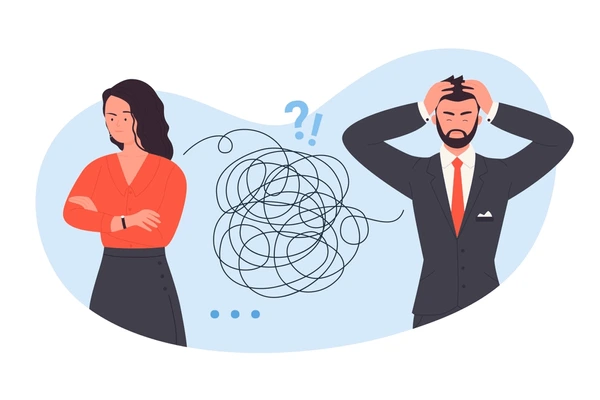
Have you ever walked away from a conversation with your partner feeling completely unheard, only to have them claim they listened to every word? Or perhaps you’ve tried to offer a logical solution to your partner’s problem, only to have them become upset because you “aren’t being supportive”? These moments of frustration are rarely about a lack of love. Instead, they are often a classic case of being “lost in translation.” Gender communication differences are real, and understanding the distinct “dialects” of relationship communication is the first step toward stopping the cycle of misunderstanding.
Report vs. Rapport: The Root of Gender Communication Differences
Linguists and psychologists often categorize communication into two primary styles: “Report talk” and “Rapport talk.”
Understanding the “Fixer” Mindset in Men
Men are often socialized to use communication as a way to maintain status and achieve goals—this is “Report talk.” For many men, a conversation is task-oriented. When a partner brings up a problem, their brain immediately shifts into logic-driven mode to find a solution. In their mind, “fixing” the problem is the ultimate act of love.
The Female Need for Emotional Processing
Women, conversely, often use “Rapport talk.” For them, communication is the primary tool for building empathy and connection. The goal of sharing a problem isn’t always to get a solution; it’s to share the emotional processing of the event. When a woman says, “I had a hard day,” she is often looking for a witness to her experience, not a technician to repair it.
“He Never Listens”: Decoding Why Men and Women Listen Differently
The complaint “he never listens” is one of the most frequent issues we address in counseling. However, the disconnect usually happens in how each person listens.
Physical Presence vs. Emotional Validation
A man might listen while looking at his phone or the TV, assuming that as long as he hears the words, he is listening. A woman often requires eye contact and non-verbal cues (like nodding or “mm-hmm”) to feel that her partner is present. Without these “minimal encouragers,” she interprets his physical stillness as emotional absence.
Why Men Withdraw During Emotional Flooding
When a conversation becomes highly emotional, some men experience emotional flooding—a physiological state where their heart rate spikes and their brain feels overwhelmed. To protect themselves, they might withdraw to a safe distance or become silent. This isn’t a sign that they don’t care; it’s a sign that their system is “overheated.”

Couples Therapy for Men: Breaking the Stigma of “Talking About Feelings”
Many men are reluctant to seek help because they fear therapy is just an hour of being criticized for not being “emotional enough.” At Rongrong Consulting, we change that narrative. We view couples therapy for men as a strategic training ground. We treat communication as a high-level “soft skill” that makes a man more successful as a husband, father, and leader. By mastering these tools, men can lead their families toward greater peace and less conflict. You can explore how we facilitate this in our marriage repair category.
Actionable Steps to Improve Relationship Communication Today
You can bridge the gap by becoming your partner’s “translator.”
- The “Notice and Ask” Technique for Men: Before jumping to a solution, stop and ask: “Do you want me to just listen, or are you looking for a solution right now?” This simple question prevents 90% of communication friction.
- Being Direct and Strategic: A Tip for Women: Avoid using “hints” or expecting your partner to read between the lines. Be direct: “I’m really stressed and I just need ten minutes to vent without you trying to fix it. Can you do that for me?” This gives him a clear “win” and a specific task to succeed at.
Harmony Isn’t About Thinking Alike, But Talking Better Together
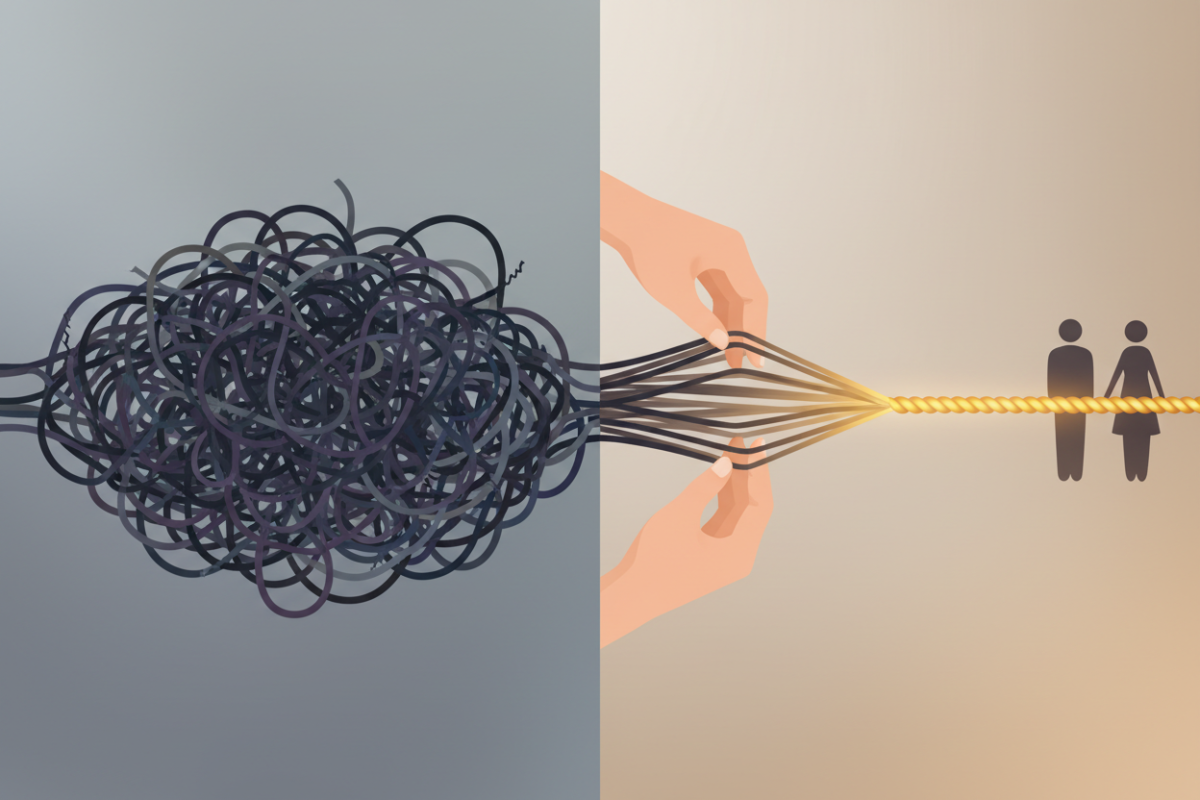
A healthy relationship doesn’t require you to change who you are; it requires you to understand the “culture” of your partner. When you stop viewing your differences as character flaws and start seeing them as different communication styles, the resentment begins to melt away.
If you feel like you are speaking two different languages, you don’t have to stay frustrated. Our expert consultants can help you build a shared language for your relationship.
Common Questions About Gender and Communication
Are gender differences in communication biological or learned? It is a mix of both. While there are subtle biological differences in how brains process language and emotion, a large portion of these styles is learned through social conditioning and cultural expectations from a very young age.
How can I make my husband more emotionally expressive? Start by creating a “criticism-free zone.” Men are more likely to share their inner world when they feel it is safe to do so without being judged or “corrected.” Use active listening and praise him when he does share.
Why does he always try to “fix” my problems when I just want to vent? Because in his “Report talk” world, leaving a problem unsolved is inefficient and stressful. He is trying to be helpful. Acknowledging his intent (“I appreciate that you want to help me fix this”) before asking for empathy can make him more receptive.








 English
  Chinese