

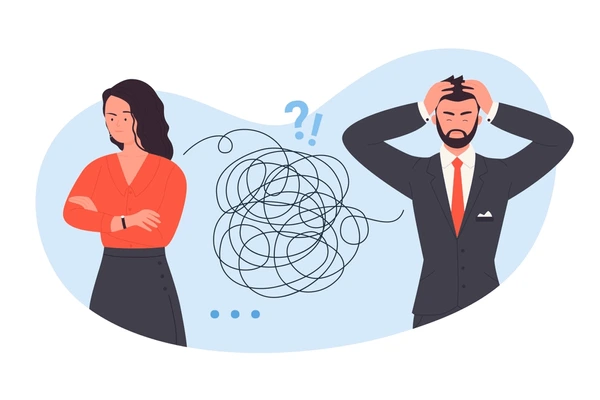
We often hear that “silence is golden,” but in a marriage, it can be the loudest scream. There is nothing more suffocating than a home filled with tension where not a single word is spoken for days. If you are experiencing this, you are dealing with the silent treatment in relationships. While some use it to “cool off,” it often crosses the line into stonewalling in relationships—a destructive behavior that leaves the other partner feeling invisible. This guide decodes the psychology behind the shutter and provides strategies to handle emotional neglect in marriage before it permanently erodes your bond.
More Than Just “Needing Space”: Defining the Silent Treatment
It is crucial to distinguish between a healthy “time-out” and the silent treatment.
Stonewalling vs. Healthy Emotional Regulation
In a healthy relationship, a partner might say, “I’m too angry to talk right now; let’s take an hour to calm down.” This is emotional regulation. Stonewalling in relationships, however, is an abrupt, unannounced withdrawal. It is one of “Gottman’s Four Horsemen,” a key predictor of relationship failure. It isn’t a request for space; it is a refusal to engage.
The Silent Treatment as a Power Dynamic
At its worst, the silent treatment is a tool for control. By withdrawing affection and communication, one partner forces the other to “beg” for reconnection. This is a form of passive-aggressive behavior that creates a toxic power imbalance, making it impossible to solve the original problem.
The Hidden Scars of Emotional Neglect in Marriage
The impact of prolonged silence is not just “annoying”—it is physiologically painful.
Why Your Brain Processes Silence as Physical Pain
Neuroscience research shows that the human brain processes social exclusion and ostracism in the same region that registers physical pain. When you are ignored by a partner, your brain reacts as if you have been physically injured. Chronic emotional neglect in marriage can lead to severe anxiety, depression, and a shattered sense of self-worth.
How Repeated Silence Erodes Relationship Security
Trust is built through response. When your partner repeatedly shuts you out, your “attachment security” is threatened. You no longer feel like you have a reliable partner, which leads to a permanent state of hyper-vigilance and fear within the relationship.

Why Do They Do It? Decoding the Psychology of the Shutter
Not every person who uses the silent treatment is trying to be cruel. Understanding the motive is the first step toward a solution.
Conflict Avoidance and Emotional Flooding
For many, silence is a desperate defense mechanism. When they feel overwhelmed by intense emotions—a state known as emotional flooding—their brain literally shuts down. They go silent because they don’t have the tools to process the conflict safely.
The Role of Family History
Communication styles are often inherited. If a person grew up in a family of origin where the silent treatment was the standard way to handle anger, they likely adopted this pattern as their primary survival skill. They may not even realize how harmful it is to their partner.
How to Respond When Your Partner Shuts You Out
If you are on the receiving end of the silence, your reaction determines whether the wall gets taller or starts to crumble.
- Stay Calm and Avoid Chasing: Your instinct may be to follow them from room to room, demanding an answer. This usually increases their flooding. Instead, focus on your own emotional independence. Give them a limited amount of space while remaining calm.
- Inviting Reconnection with “I” Statements: Once the initial heat has passed, use non-threatening language. Try saying: “I feel lonely and hurt when we don’t speak. I want to hear your perspective when you are ready.”
- Setting Firm Boundaries: If the silence lasts for days or is used to punish you, it is vital to name the behavior. “I value our relationship, but I cannot live in a home where I am ignored for days. We need a better way to handle disagreements.”
Turning the Silence into a Conversation
Breaking a long-standing cycle of silence is difficult to do alone. Communication is a skill that requires coaching, especially when one partner has a habit of shutting down.
If silence is poisoning your peace, our experts can help you reopen the channels of communication. Discover how our marriage repair strategies can help you break the cycle of stonewalling.
Questions About Silent Treatment and Stonewalling
Is the silent treatment considered emotional abuse? It depends on the intent and duration. If it is used occasionally due to overwhelm, it is a communication flaw. If it is used systematically to punish, control, or devalue a partner, it is considered a form of emotional abuse.
How long is “too long” for a cold war to last? A healthy “cooling off” period should last no more than a few hours. Any silence that lasts longer than 24 hours is no longer about “calming down” and has become a destructive pattern that requires intervention.
What if I am the one who shuts down during arguments? Awareness is the first step. Learn to recognize the physical signs of emotional flooding (racing heart, tight chest). Before you shut down, tell your partner: “I am feeling overwhelmed and I need 20 minutes to calm down so I don’t say something I regret.”
Can online counseling help if one partner won’t talk? Yes. A therapist can act as a neutral bridge, providing a safe structure where the silent partner feels less threatened. Often, the presence of a professional makes it easier for the “shutter” to open. If you’re ready to break the silence, contact our team for a confidential assessment.



 English
  Chinese