

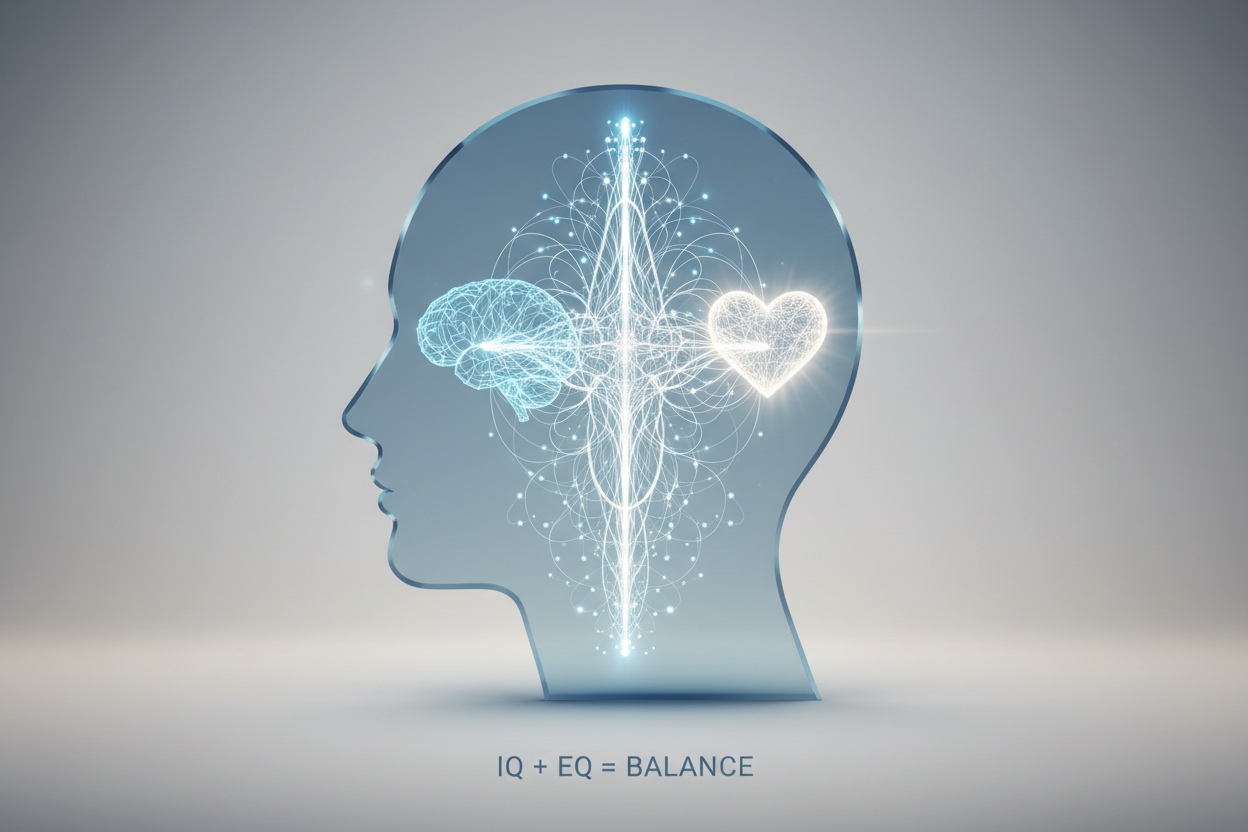
You might be successful in your career, highly intelligent, and logical, yet still find yourself struggling to connect deeply with your partner or constantly feeling “misunderstood” in social situations. Why? Because relationships don’t run on IQ (Intellectual Intelligence); they run on EQ (Emotional Intelligence). High-EQ communication is the secret ingredient that transforms superficial interactions into deep, meaningful bonds. It’s not just about “talking nice”; it’s about the ability to perceive, control, and evaluate emotions—in yourself and others. This article explores 5 powerful relationship communication skills you will master in counseling to elevate your social intelligence.
What is High-EQ Communication? (And Why You Need It)
High-EQ communication moves beyond the words you say to the way you say them and the emotions behind them. It shifts you from “reacting” impulsively to “responding” thoughtfully.
The 4 Pillars of Emotional Intelligence
To understand emotional intelligence in relationships, visualize four pillars:
-
Self-Awareness: Recognizing your own emotions as they happen.
-
Self-Management: Controlling your impulsive feelings and behaviors.
-
Social Awareness: Understanding the emotions, needs, and concerns of other people.
-
Relationship Management: Developing and maintaining good relationships.
Counseling acts as a training ground to strengthen these pillars, turning abstract concepts into daily habits.
Skill #1: The Art of Validation (Making Others Feel Seen)
One of the most profound human needs is to be understood. High-EQ individuals are masters of validation.
Why “I Understand” isn’t Enough
Validation doesn’t mean you agree with the other person’s opinion; it means you accept their experience as valid. Instead of jumping to fix a problem, a high-EQ response is: “It makes sense that you feel hurt because you were expecting X.” This lowers defenses instantly.
Practicing Validation in Conflict
In therapy, you learn to pause during a disagreement to mirror back what your partner is feeling. This simple act of saying, “I hear that you are frustrated,” creates emotional safety and stops a fight from spiraling.
Skill #2: Emotional Regulation (Mastering Your Own Triggers)
Have you ever said something hurtful in the heat of the moment, only to regret it five minutes later? That is an “emotional hijack.”
Identifying the “Emotional Hijack” Before It Happens
High-EQ communication requires you to recognize the physical signs of anger or anxiety—like a racing heart or clenched jaw—before you speak. Counseling teaches you techniques to self-soothe and “hit the pause button,” allowing your rational brain to catch up with your emotional brain.
Skill #3: Assertiveness vs. Aggression (Stating Needs Clearly)
Many people confuse emotional intelligence with being a “pushover.” Real EQ includes assertive communication—standing up for yourself while respecting others.
The “XYZ” Formula for Expressing Needs
Therapists often teach the “XYZ” formula to be assertive without being aggressive: “When you do X, I feel Y, and what I need is Z.”
-
Aggressive: “You’re so lazy, you never help!”
-
Assertive (High EQ): “When the dishes pile up (X), I feel overwhelmed (Y). I need us to stick to our cleaning schedule (Z).”

Skill #4: Empathy Accuracy (Reading Between the Lines)
Empathy isn’t just a feeling; it’s data gathering. High-EQ communication involves reading non-verbal cues—tone of voice, facial expressions, and posture.
Decoding Non-Verbal Cues
In counseling, you practice “checking your accuracy.” You learn to ask, “You seem quiet tonight; are you feeling anxious about the presentation tomorrow?” This shows you are paying attention to the whole person, not just their words.
Skill #5: Repair Attempts (The Secret Weapon of Happy Couples)
Dr. John Gottman’s research shows that the difference between happy and unhappy couples isn’t that happy couples don’t fight; it’s that they know how to repair.
How to Stop a Fight from Spiraling
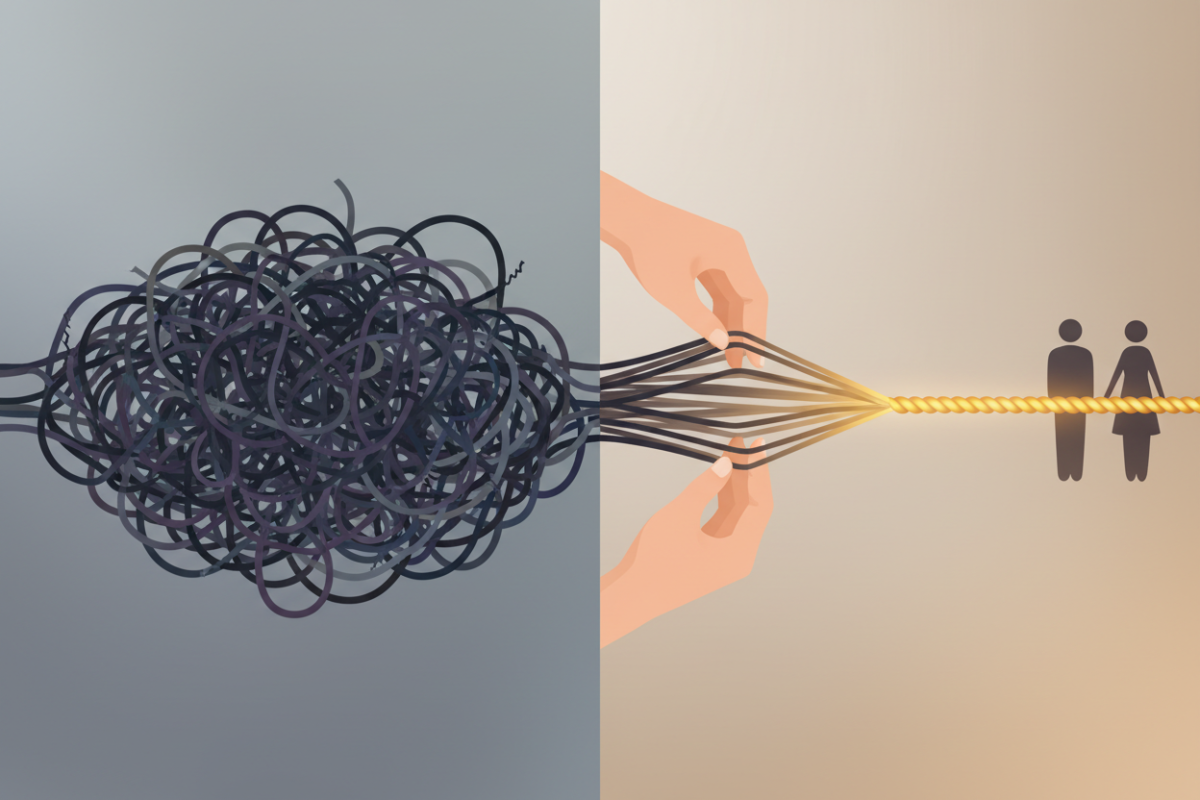
A repair attempt is any statement or action—silly or serious—that prevents negativity from escalating out of control. It could be a smile, a joke, or a simple “I’m sorry, I overreacted.” High-EQ individuals know how to deploy these at the right moment to de-escalate tension.
Your EQ is a Muscle: Start Training It Today
Emotional intelligence is not a fixed trait you are born with; it is a muscle that can be built with training. Therapy provides the gym and the personal trainer.
If you want to stop feeling misunderstood and start building magnetic, resilient connections in your love life and career, we can help you train these skills. Explore our individual growth services to begin your transformation.

Questions About Improving Your EQ
Can adults really learn emotional intelligence?
Absolutely. While personality traits are relatively stable, EQ is a skill set that is highly plastic. Neuroplasticity means your brain can learn new emotional habits at any age with consistent practice.
How does individual therapy help with my relationship skills?
Individual therapy gives you a safe lab to dissect your past interactions, role-play new responses, and gain feedback on your communication style without the pressure of a real-time conflict.
Is high EQ the same as being “nice” all the time?
No. Being “nice” can sometimes mean suppressing your own needs to please others. High EQ means being authentic. It involves setting boundaries and having difficult conversations, but doing so with respect and clarity.
How long does it take to see changes in my communication style?
It depends on your dedication to practice. Clients often report feeling more in control of their reactions within a few weeks, while deep shifts in communication patterns typically solidify over several months of work.








 English
  Chinese