


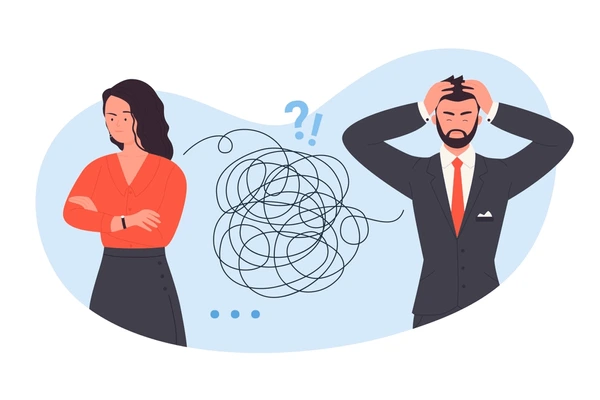
Are you tired of having the exact same argument every week? Do you feel like a small disagreement over the dishes quickly spirals into a three-day cold war? If so, you are not alone. Constant fighting is exhausting, but the goal of a healthy relationship isn’t to stop disagreeing—it’s to change how you disagree. Conflict resolution in marriage is a skill that can be learned. By mastering specific couples therapy communication techniques, you can transform your arguments from destructive battles into opportunities for deeper understanding. This guide explores how to stop fighting in a relationship and start building bridges instead.
Why We Get Stuck: Understanding Your Relationship Conflict Cycle
Before you can change the outcome of a fight, you must understand the “engine” driving it. Most marital conflicts fail because of two hidden factors.
The Physiology of a Fight: When Logic Leaves the Room
When an argument gets heated, your body enters “fight-or-flight” mode. This is known as emotional flooding. Your racing heart and shallow breathing signal to your brain that you are under attack. In this state, the logical part of your brain shuts down. You literally lose the ability to problem-solve.
Identifying Your Negative Interaction Patterns
Many couples fall into the demand-withdraw cycle. One partner pursues an answer while the other partner retreats to find safety. This creates a loop where the “pursuer” feels ignored and the “distancer” feels overwhelmed. Understanding this dynamic is a core part of effective conflict resolution in marriage.
The Rules of Engagement: Core Couples Therapy Communication Skills
In therapy, we establish “Rules of Engagement” to ensure that conflict stays productive.
The Golden Rule: No Below-the-Belt Hits
To fight fair, you must agree to ban character attacks and insults. Focus on the behavior, not the person. Instead of saying “You are so selfish,” focus on the specific situation. This keeps the conversation safe enough for both people to stay present.
Fighting for the Relationship, Not for the Win
In a marriage, if one person “wins” an argument, the relationship loses. Shift your mindset toward shared goals. The objective is to find a solution that makes both partners feel respected and heard. You can see how our experts help couples shift this mindset by exploring our resources on marriage repair.

4 Practical De-escalation Techniques to Use Mid-Argument
When you feel the tension rising, use these tools to lower the temperature.
- The Strategic Time-Out (The 20-Minute Rule): If you feel flooded, ask for a break. It takes the human body at least 20 minutes to physically calm down from an emotional hijack. Agree to come back to the talk when you both feel regulated.
- Using “I” Statements to Minimize Defensiveness: This is a classic couples therapy communication tool. Say “I feel overwhelmed when the house is messy” rather than “You never clean up.” This avoids blaming and invites empathy.
- The Power of the Repair Attempt: A “repair” is any effort to diffuse tension. It could be a small joke, a sincere apology, or a gentle touch. Successful couples notice and accept these attempts even in the middle of a fight.
- Mirroring and Validation: Before you state your counter-argument, repeat back what you heard your partner say. Active listening like this ensures your partner feels heard, which instantly lowers the need for them to yell or withdraw.
How Conflict Resolution in Marriage Strengthens Your Bond
When you learn to resolve conflict successfully, you build “relational confidence.” You no longer fear disagreements because you know you have the tools to handle them. Every resolved conflict is a deposit into your relationship’s bank account, building a foundation of trust and emotional safety.
Transforming Fights into Bridges of Connection
Disagreement is inevitable, but disconnection is a choice. You don’t have to keep having the same painful fights. With the right tools and professional guidance, you can learn to navigate conflict in a way that actually brings you closer together.
If you are ready to break the cycle of constant conflict, we are here to help. Master conflict resolution with professional guidance and rediscover the peace in your home.
Questions About Stopping Constant Arguments
Is it possible to never fight in a healthy relationship? Actually, never fighting can be a red flag for “conflict avoidance.” Healthy relationships have conflict, but they also have effective conflict resolution. The goal is healthy expression, not total silence.
What if my partner refuses to use these techniques? You can still lead by example. When you stop attacking and start using “I” statements, your partner’s defensiveness will naturally decrease. One person changing their “moves” can change the entire dance.
How long after a big fight should we wait to discuss it? Wait until you are both out of the “fight-or-flight” zone, but don’t wait so long that the issue is swept under the rug. Usually, 2 to 24 hours is the “sweet spot” for a productive follow-up conversation.
Can online therapy really help us stop fighting? Yes! Online therapy is highly effective for conflict because it allows you to practice these skills in your own environment. A therapist can observe your real-time dynamics and provide immediate coaching. Learn more about the effectiveness of online therapy for your relationship.





 English
  Chinese