

Couples therapy for jealousy is not about suppressing your feelings; it is about understanding them and learning dealing with jealousy in a relationship in a way that builds trust rather than eroding it.
The Psychology Behind the Rage: Why Do We Get Jealous?
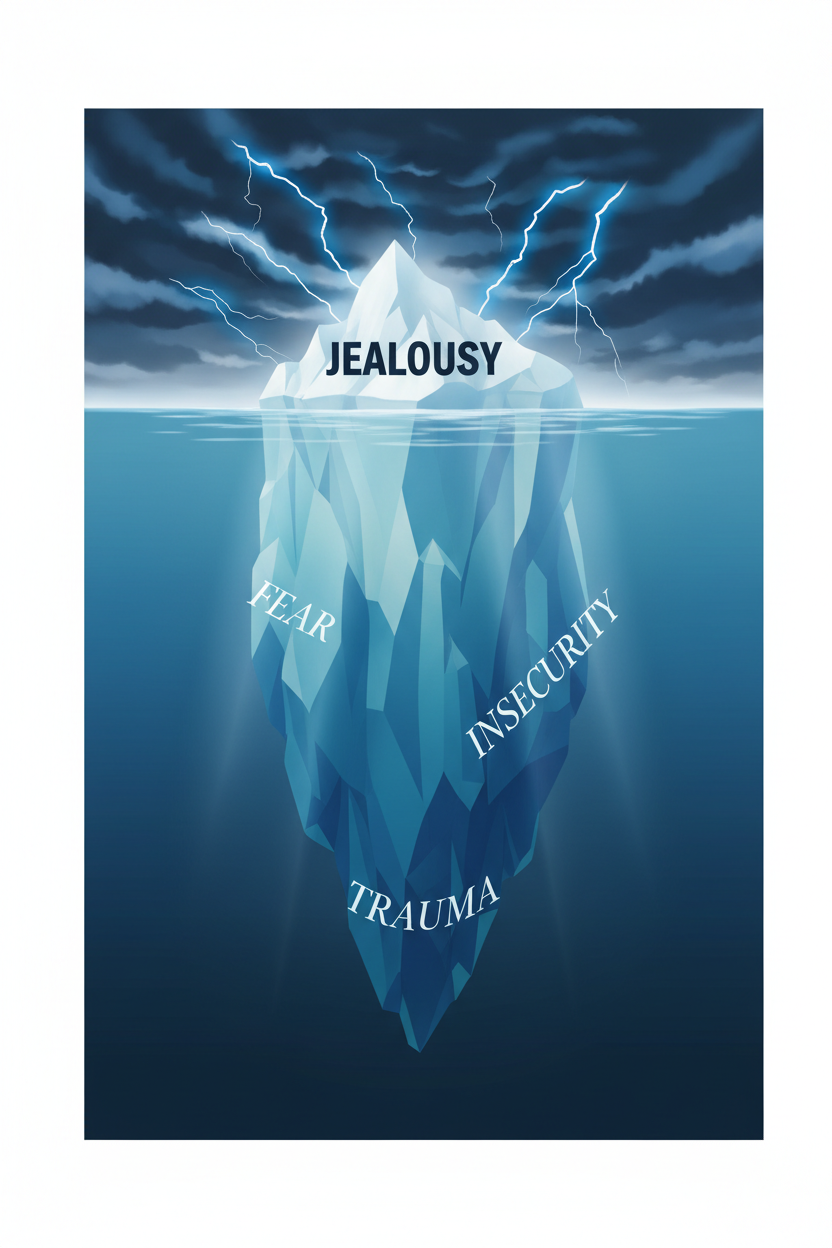
To tame the “green-eyed monster,” we must first understand what feeds it. Jealousy is rarely just about what your partner is doing right now; it is often an echo of something deeper.
The Fear of Abandonment and Attachment Styles
At its core, jealousy is often a panic response to the threat of losing someone we love. If you have an anxious attachment style, you may be hyper-vigilant to any sign of withdrawal or rejection, interpreting a missed call as a sign that your partner is leaving you.
The Narrative of “I’m Not Good Enough” (Low Self-Esteem)
Jealousy is frequently a mirror of our own insecurity. If you struggle with low self-esteem, you might constantly worry that your partner will find someone “better,” “smarter,” or “more attractive.” The jealousy isn’t about your partner’s loyalty; it’s about your own self-worth.
Past Trauma and Betrayal: When History Repeats Itself
If you have been cheated on in the past, your brain is wired to detect danger. You aren’t just reacting to the present moment; you are reacting to past trauma. Old wounds can make it incredibly difficult to distinguish between a current reality and a past memory.
The Vicious Cycle: How Jealousy Creates What It Fears
The tragedy of jealousy is that it often becomes a self-fulfilling prophecy. The behaviors intended to keep a partner close often push them away.
The Investigation Phase: Checking Phones and Social Media
It starts with “snooping.” Checking texts, monitoring social media likes, or tracking locations might give temporary relief, but it ultimately fuels anxiety and violates your partner’s privacy, eroding trust from both sides.
The Accusation and Defense Loop
Jealousy leads to accusations (“Who were you talking to?”). This inevitably leads to defensiveness (“Why don’t you trust me?”). The result is a cycle of conflict where neither partner feels heard or safe.
The Self-Fulfilling Prophecy: Pushing Your Partner Away
Eventually, the constant suspicion and need for reassurance become exhausting. A partner who is constantly accused of things they haven’t done may eventually withdraw emotionally or physically to protect themselves, which the jealous partner then interprets as proof that their fears were right all along.
How Couples Therapy for Jealousy Breaks the Cycle
Professional counseling provides the tools to stop this destructive spiral. Here is how couples therapy for jealousy works.
Decoding the Signal: What Need is the Jealousy Trying to Express?
A therapist helps you look beneath the anger to find the vulnerable need. Instead of “You’re flirting with her,” the real message might be, “I feel invisible and I need to know I matter to you.”
Reality Testing: Separating Facts from Insecure Stories
Using techniques like Cognitive Behavioral Therapy (CBT), a therapist helps you identify “cognitive distortions.” You learn to challenge your own thoughts: “Is there evidence for this thought, or is this my insecurity talking?”
Building “Earned Security” Through Transparency and Reassurance
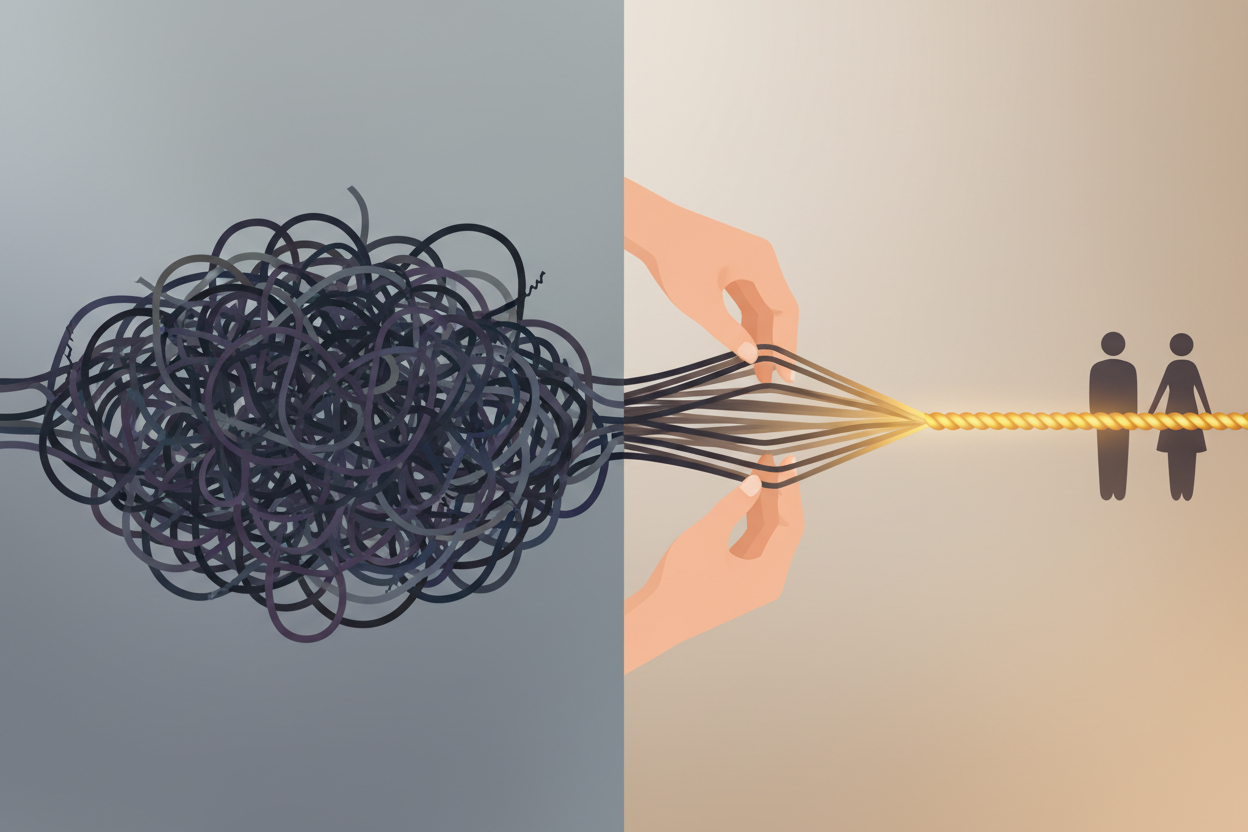
Trust isn’t blind; it’s built. Therapy helps the couple negotiate healthy boundaries. It teaches the partner how to provide transparency and reassurance that calms the jealous partner’s nervous system without enabling controlling behavior.
Actionable Steps for Dealing with Jealousy in a Relationship
You can start changing the dynamic today with these steps.
For the Jealous Partner: “Name It to Tame It”
When the feeling rises, acknowledge it vulnerably rather than acting on it aggressively. Instead of accusing, say: “I’m feeling really insecure right now and my brain is telling me stories. I could use some reassurance.”
For the Other Partner: How to Reassure Without Enabling
Don’t get defensive. Validate the feeling, even if you disagree with the facts. “I hear that you’re scared I’m going to leave. I’m not going anywhere. I love you.” This calms the panic.
The 24-Hour Rule: Pausing Before Reacting
Make a pact: if you feel the urge to snoop or accuse, wait 24 hours. Often, the intensity of the emotion will fade, allowing you to address the issue (if it still exists) with a clearer head.
Jealousy Can Be a Messenger of Love
Jealousy doesn’t have to be the end of your relationship. If handled with care, it can be a messenger alerting you to unhealed wounds or unmet needs. By facing it together, you can deepen your intimacy.
Don’t let the green-eyed monster consume your love. Our counselors can help you untangle the knots of insecurity and rebuild trust. We invite you to to turn this pain into a catalyst for growth.

Common Questions About Relationship Jealousy
Is a little bit of jealousy healthy? Yes, mild jealousy can be a sign that you value the relationship. It becomes unhealthy when it leads to controlling behavior, constant anxiety, or abuse. The goal is not to eliminate jealousy, but to manage it.
Can therapy really cure deep-seated insecurity? Therapy is highly effective for overcoming insecurity. By addressing the root causes—such as childhood attachment issues or past trauma—you can build a stronger sense of self-worth that isn’t dependent on your partner’s every move.
How do I know if my jealousy is actually gut instinct (intuition)? This is a tough one. Jealousy usually feels frantic, loud, and obsessive. Intuition is usually a quieter, calmer, and persistent “knowing.” Therapy can help you learn to distinguish between your trauma triggers and your true intuition.
What if my partner refuses to stop the behavior that makes me jealous? If your partner is crossing clear boundaries (like flirting excessively or hiding friendships) and refuses to change, that is a relationship issue, not just a jealousy issue. In this case,



 Chinese
  English