


What if the primary thing destroying your marriage is not what you argue about, but how you think about your partner? When couples face constant conflict, they often blame external circumstances or each other’s character. However, the root of the problem frequently lies in unseen, automatic thoughts. Cognitive behavioral therapy for couples is a highly respected, evidence-based approach that addresses exactly this. It focuses on the powerful science of changing negative thought patterns to transform how partners feel and act toward one another. If you are looking for a logical, structured way to heal your relationship, read on to understand how this method can rewire your connection.
What is Cognitive Behavioral Therapy (CBT) for Couples?
CBT is widely considered the gold standard in modern psychotherapy. While traditional therapy might spend years analyzing your childhood, CBT focuses on the present.
The Core Premise: Your Thoughts Shape Your Reality
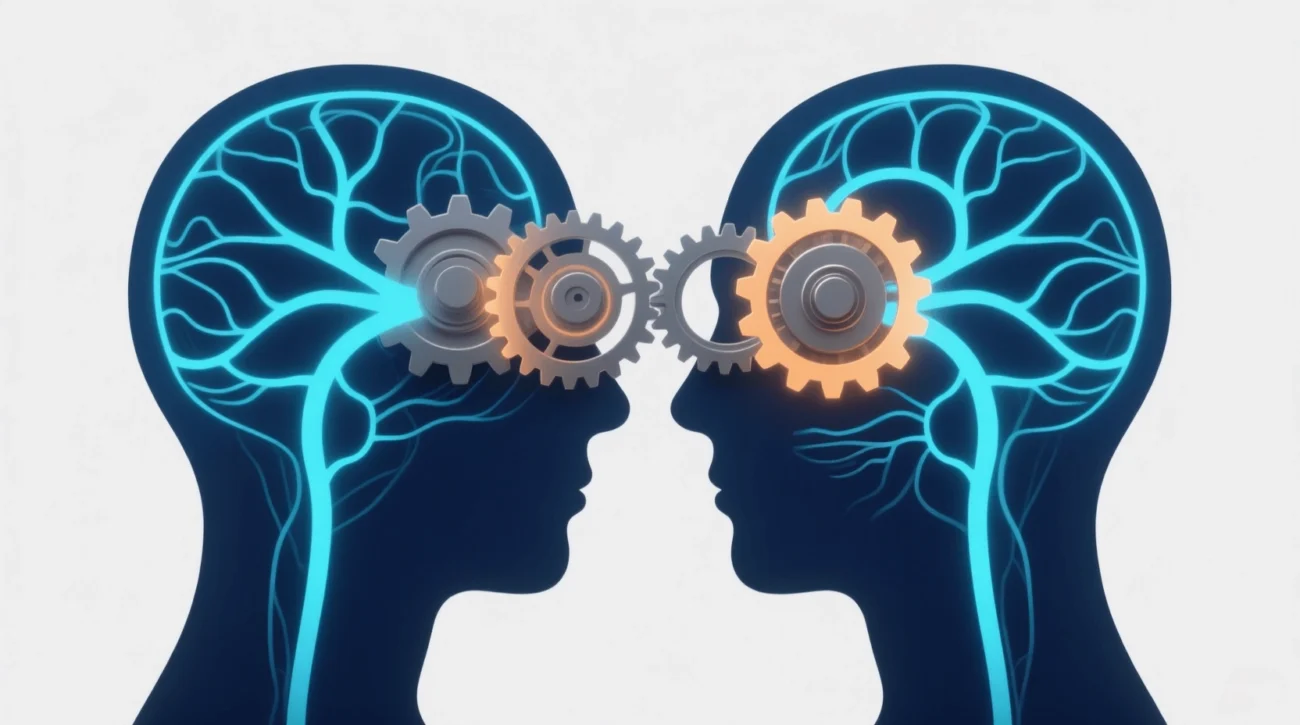
The fundamental principle of CBT is a simple triangle: your thoughts influence your feelings, which in turn dictate your behaviors. If you hold negative core beliefs or have a skewed perception of your partner’s intentions, you will feel angry or hurt, leading to destructive behavior. CBT for relationship issues targets this interpretation process directly.
From “Me” to “We”: Treating the Relationship Dynamic
In individual CBT, the focus is on personal mental health. In couples CBT, the “patient” is the relationship itself. The therapist helps you understand your mutual influence and how your individual thoughts create toxic behavioral loops that trap both partners. You can learn more about how our certified professionals on our team apply these dynamics in practice.
3 Common “Cognitive Distortions” Destroying Your Marriage
Cognitive distortions in marriage are mental blind spots or thinking traps. They convince your brain of something that isn’t entirely true. Recognizing them is the first step to healing.
Mind Reading: “I Know What You’re Thinking”
This distortion occurs when you make negative assumptions about your partner’s motives without asking them. For example, if they are quiet during dinner, you immediately jump to the conclusion: “They are angry with me.” This leads to unnecessary tension.
The Blame Game: Externalizing the Problem
Instead of looking at the interaction, one partner projects all the fault onto the other. Defensiveness takes over. You might think, “If they weren’t so demanding, I wouldn’t have to yell.” This prevents any real problem-solving and escalates conflict.
“Always” and “Never” Statements (All-or-Nothing Thinking)
During an argument, do you say things like, “You never listen to me” or “You always put work first”? This absolute, black-and-white thinking invalidates your partner’s positive efforts and leaves them feeling hopeless and attacked.
How CBT for Relationship Issues Actually Works in Session
How does a therapist help you break these habits? It involves a structured, collaborative process.
Step 1: Identifying Automatic Negative Thoughts (ANTs)
Your therapist will ask you to start tracking triggers. You will learn to catch those automatic negative thoughts in real-time. Developing this high level of self-awareness is crucial.
Step 2: Reality Testing and Reframing the Narrative
Once an ANT is caught, you put it on trial. Is it a fact, or is it a distortion? Through cognitive restructuring, your therapist will help you build alternative, more balanced perspectives. Instead of “They don’t care,” the reframe becomes, “They are stressed from work and need a moment to decompress.”
Step 3: Changing Behaviors to Change Feelings
CBT is active. You will receive homework exercises. You might practice scheduled positive interactions or specific communication scripts. By changing your behavior first, you can actually lead your emotions into a healthier state.
The Tangible Benefits of an Evidence-Based Approach
Why choose a highly structured method over traditional counseling? The benefits are measurable and long-lasting.
Reducing Emotional Reactivity During Conflicts
By intercepting your thoughts before they turn into anger, you achieve profound emotional regulation. This allows for rapid de-escalation during heated moments, preventing fights from spiraling out of control.
Building a Toolbox of Skills for Future Challenges
CBT equips you with a specific toolbox. You learn how to identify your own distortions, ensuring long-term success and preventing relapse when future crises arise. You become your own therapist over time.
Change Your Thoughts, Change Your Relationship
You cannot control everything your partner does, but you have absolute control over how you interpret and react to their actions. By rewiring your thoughts, you can completely change the trajectory of your marriage.
If you appreciate a logical, goal-oriented approach to healing, cognitive behavioral therapy for couples offers a proven roadmap. When you are ready to break free from toxic cycles, we invite you to explore our evidence based couples therapy resources to start your transformation.
Questions About Cognitive Behavioral Therapy for Couples
How long does CBT for relationship issues usually take?
CBT is generally a short-term, solution-focused therapy. Many couples see significant improvements within 12 to 20 sessions, depending on the complexity of their challenges and their dedication to practicing skills outside of sessions.
Does CBT work for infidelity or deep betrayal?
Yes, it can be highly effective. While other therapies might process the initial trauma, CBT is excellent for helping the betrayed partner manage intrusive thoughts and helping the couple rebuild trust through specific, measurable behavioral changes.
What if my partner is resistant to doing the “homework” exercises?
This is a common hurdle. A skilled CBT therapist will explore the resistance without judgment. Often, reframing the “homework” as simple “relationship experiments” makes it feel less like a chore and more like a collaborative discovery.
How is CBT different from Emotionally Focused Therapy (EFT)?
While both are highly effective, they have different starting points. CBT primarily focuses on how your thoughts influence your behaviors and relationship dynamics. EFT focuses primarily on identifying and sharing underlying emotions to rebuild secure attachment bonds. Many modern therapists integrate elements of both. If you are unsure which is right for you, pleasecontact our team to schedule an initial consultation.
 English
  Chinese